
When to Change Car Seat: A Safety-First Guide to Car Seat Stages and Upgrades
Navigating car seat safety can feel overwhelming for any parent. With shifting regulations, conflicting advice online, and a rapidly growing baby, knowing the precise moment to move to the next seat stage often brings a wave of anxiety.
Staying in the current seat stage as long as possible is always the safest option. Moving a baby up a stage too early reduces their protection level during an impact. Knowing the specific physical signs and legal milestones helps you make every transition with complete confidence.
TL;DR
- Always follow your specific seat’s height or weight limit on the orange approval sticker rather than relying strictly on age.
- An infant car seat is outgrown when your baby’s head reaches the top of the shell, not when their feet touch the vehicle seat.
- Keep your child rear-facing for as long as possible: at least 15 months under current regulations.
- Avoid upgrading early; each stage move transitions your child into a system designed for a larger body frame.
Content

How to Know When to Change Car Seat
To know when to change a car seat, check whether your child has reached the maximum height or weight limit printed on the seat’s official approval sticker. For infant carriers, move your baby when the top of their head becomes level with the top rim of the shell, or when they exceed the maximum weight (typically 13kg) or maximum height (usually 75cm to 87cm under i-Size regulations).
Quick Safety Check:
- Safe (OK): Head is 2cm or more below the top rim of the seat shell.
- Time to Move: Head is level with or passes above the top rim of the shell.
- Normal Position: Bent legs or feet touching the back seat of the vehicle are completely safe.
Physical Signs Your Baby Has Outgrown Their Seat
Many parents assume a baby has outgrown their infant carrier when their feet touch the back seat of the car. Bent knees or scuffed boots are completely normal, safe, and expected. Children are far more flexible than adults, and bent legs present no safety risk in a rear-facing position.
Instead, look for these physical indicators:
- Head Position: If the crown of your baby’s head is less than 2 cm from the top edge of the plastic shell (or passes it entirely), they need an immediate upgrade.
- Harness Position: On rear-facing seats, the harness straps should originate at or slightly below your child’s shoulders. If the harness cannot be adjusted high enough to avoid curving down over the shoulders, the seat is outgrown.
- Weight Limit: Every seat has a strict maximum weight capacity. Weigh your child periodically in standard clothing to ensure they remain within bounds.
Understanding Car Seat Stages and Regulations
Navigating car seat stages requires understanding two UK standards: ECE R44/04 (based on weight groups: Group 0+, 1, 2, 3) and ECE R129/i-Size (based on a child’s height in centimetres). R129 is the modern standard, requiring children to remain rear-facing until at least 15 months of age for improved neck and head protection during frontal impacts.
| Car Seat Stage | ECE R44/04 Group (Weight) | ECE R129 / i-Size (Height) | Typical Age Range | Primary Harness Type |
| Infant Carrier | Group 0+ (0 to 13kg) | 40cm to 75cm/87cm | Birth to ~12–15 months | 3-point or 5-point internal harness |
| Toddler / Combination | Group 1 (9kg to 18kg) | 61cm/76cm to 105cm | ~9 months to 4 years | 5-point harness or impact shield |
| High-Back Booster | Group 2/3 (15kg to 36kg) | 100cm to 150cm | ~4 years to 12 years | 3-point adult seatbelt |
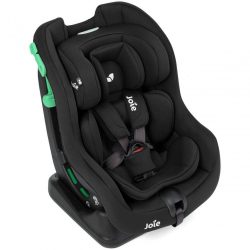
When to Switch to a Forward-Facing Car Seat: Safety Guidelines
You should only consider switching to a forward-facing car seat after your child turns at least 15 months old (compulsory under R129 regulations) and reaches at least 76 cm. However, extended rear-facing up to 4 years old (or 105 cm) is up to five times safer, as rear-facing seats distribute crash forces across the entire back and head structure.
Why Extended Rear-Facing Protects Developing Bodies
A young baby’s head accounts for roughly 25% of their total body weight, compared to just 6% in an adult. Additionally, an infant’s neck bones (cervical vertebrae) are made of soft cartilage rather than rigid bone.
In a rear-facing seat, the child’s body is pushed gently into the seat’s protective shell, which absorbs and spreads the impact energy evenly across their back and torso in the event of an accident.
- R129 Legal Requirement: Mandatory rear-facing until a minimum of 15 months and 76 cm.
- Best-Practice Recommendation: Keep your child rear-facing until the maximum height or weight limit of their combination seat (often 105 cm or 18kg/23kg).
Transitioning to High-Back Boosters
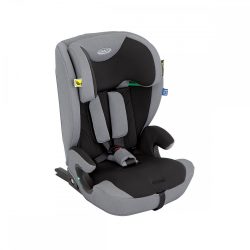
Knowing what age to switch from car seat to booster depends on height and weight maturity rather than age alone. Under R129 regulations, children can move to a high-back booster once they reach 100 cm (typically around 4 years old). Booster seats position the adult 3-point seatbelt correctly across the child’s shoulder and lap bones.
Key Criteria for Booster Seats
Before moving your child out of a 5-point harness or extended rear-facing seat, confirm that all three criteria are met:
- Height & Weight Compliance: Your child meets the minimum start height (100 cm under R129) or weight (15 kg under R44/04) for the high-back booster.
- Skeletal Maturity: Their pelvic bones have developed enough to hold a lap belt low across their hips without it sliding up onto their vulnerable abdomen.
- Behavioural Readiness: Your child must sit upright reliably for every journey without leaning out of the shoulder belt, slouching, or unbuckling the lock.
Frequently Asked Questions (FAQs)
What age to switch from car seat to booster?
Children typically switch to a high-back booster around 4 years of age, but readiness depends on height and behaviour rather than age. Under modern i-Size rules, your child must be at least 100 cm tall. They must also be mature enough to sit properly in the car without pulling the shoulder belt out of position.
Is it okay if my baby’s feet touch the back of the vehicle seat?
Yes, it is completely safe for your baby’s feet or legs to touch the vehicle’s back seat. Leg positioning does not indicate that a seat has been outgrown. A child has only outgrown a rear-facing infant carrier when they exceed the seat’s maximum weight/height limits or when their head reaches the top of the shell.
What happens if my baby exceeds the weight limit before the height limit for a car seat?
If your baby exceeds either the maximum height or the maximum weight limit stated on the car seat sticker, the seat is outgrown. Whichever limit your child reaches first dictates when you must upgrade to the next car seat stage.
Selecting Your Next Stage Seat with Confidence at Pram Centre
Every stage transition is a milestone in your child’s early development, but staying in each seat for as long as safely possible provides maximum protection. Take quick monthly measurements of your child’s height, track their weight, and keep an eye on head clearance rather than rushing to make the switch.
When the time arrives to upgrade, finding the right fit for your vehicle and your child makes all the difference. Explore the extensive range of tested car seats and carriers at the Glasgow Pram Centre, where safety expertise, leading brands, and guaranteed best prices come together to give you complete peace of mind on every journey!
Read Next
How to Fit an Isofix Car Seat Safely: An Expert Guide
Car Seat Safety: What is i-Size?
When to Move Your Baby from Pram to Pushchair: A Complete Guide
Comments are closed here.