
Why Extended Rear-Facing is Safer for Your Child: The Physics of Car Seat Safety
Choosing the right car seat is a vital part of keeping your child safe on the road. While turning your toddler forward-facing can feel like a major milestone, keeping children in an Extended Rear-Facing (ERF) seat until age four or beyond offers vastly superior protection for their developing spines and necks.
- 5x Safer: Extended rear-facing reduces the risk of severe injury or death in a collision by up to 90% compared to forward-facing seats.
- Spine Protection: In a crash, a rear-facing shell supports the head, neck, and spine, preventing dangerous hyperextension.
- Extended Duration: While UK law permits forward-facing from 15 months (i-Size), safety experts strongly recommend rear-facing until at least age 4.
- Optimal Placement: The rear centre seat is the safest location in the vehicle, provided a secure installation can be achieved.
Content
The Crash Physics: Why Is Rear-Facing Safer?
Rear-facing car seats are up to five times safer for young children because they distribute impact forces evenly across the entire back, neck, and head. In a frontal collision, a rear-facing seat shell cradles the child, keeping the fragile spinal cord aligned and drastically reducing neck strain compared to forward-facing alternatives.
Frontal collisions are the most common and severe type of vehicular crash. When a car stops abruptly, inertia causes everything inside to keep moving forward at the vehicle’s original speed.
A young child’s physical proportions differ significantly from an adult’s. A toddler’s head accounts for roughly 25% of their total body weight, compared to just 6% in an adult. To make matters more delicate, a child’s neck vertebrae are made of soft cartilage rather than solid bone, which doesn’t fully harden until they are 4 to 6 years old.
When a child sits forward-facing, the harness restrains their shoulders, but their disproportionately heavy head whips forward with extreme force. This violent motion places immense tension on the delicate cervical spine, risking catastrophic injury. In contrast, rear-facing car seat safety relies on the seat back absorbing the bulk of the impact force. The protective shell safely slows down the child’s head, neck, and torso all at the same time.
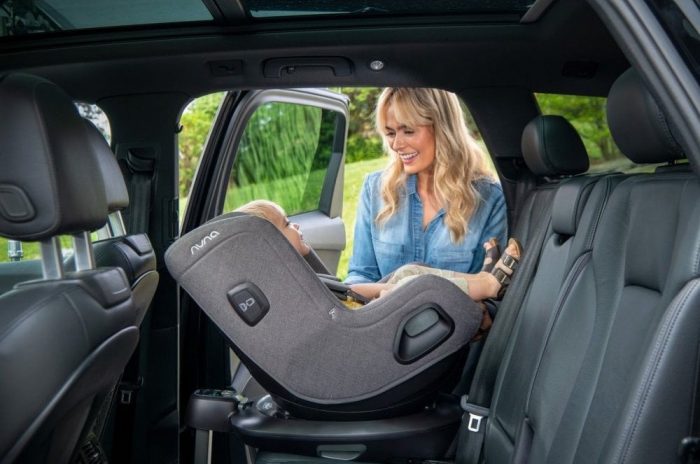
Forward vs Rear-Facing Car Seat Safety: What the Research Shows
Forward-facing harnesses hold the torso still while the head pulls forward, whereas rear-facing seats absorb kinetic energy along the entire seat shell. Sweden has pioneered rear-facing car seat safety for decades, keeping children rear-facing until age four or older. As a result, Sweden boasts some of the lowest child traffic fatality rates in the world.
| Feature / Dynamic | Rear-Facing Seat (ERF) | Forward-Facing Seat |
| Primary Force Distribution | Spread across entire back, neck, and head | Concentrated at harness points and neck |
| Neck Stress Level | Minimal (cradled in backrest) | Extreme (head whips forward freely) |
| Severe Injury Risk | Estimated 8% to 10% | Estimated 40% to 50% |
| Recommended Age | Birth up to 4–6 years (25 kg / 125 cm) | Minimum 15 months, ideally 4+ years |
A common concern among parents is leg room. Toddlers are naturally flexible and comfortably rest their legs against the vehicle seat back or cross them. Biomechanical studies confirm that leg injuries are actually far more common in forward-facing crashes, where legs strike the vehicle interior.
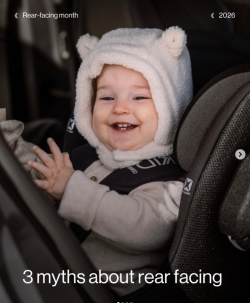
Where Should Rear-Facing Infant Safety Seats Be Placed?
Knowing exactly where to install your rear-facing seat is vital for crash protection. The safest position is the rear centre seat, as it provides the maximum distance from side-impact zones. If the centre seat lacks ISOFIX points or a three-point seatbelt, the rear passenger side is the next best alternative.
Proper vehicle placement maximises the physical protection provided by an ERF seat.
- Rear Centre Seat: The primary location. It isolates your child from direct side-impact intrusion during T-bone collisions.
- Rear Passenger Side: The secondary location. It allows safe, kerbside loading away from traffic.
- Front Passenger Seat: Never place a rear-facing seat in the front passenger seat if the airbag is active. A deploying airbag can strike the car seat with sufficient force to cause fatal injuries. If you must use the front seat, the airbag must be completely deactivated.
Frequently Asked Questions (FAQs)
How long should an infant be rear-facing?
Under UK i-Size regulations (R129), infants must legally remain rear-facing until at least 15 months old. However, safety organisations and crash testers strongly advise keeping children rear-facing until at least age 4, or until they reach the maximum height or weight limit of an extended rear-facing seat.
Will my child get motion sick from rear-facing?
A disconnect between the inner ear balance system and visual cues causes motion sickness. Toddlers who have only ever travelled rear-facing rarely experience motion sickness because it is their normal baseline. Plus, high-seated ERF models offer an excellent view out of the rear and side windows to help prevent motion sickness.
Do extended rear-facing car seats fit in smaller cars?
Yes. Many modern ERF seats are designed specifically for compact vehicles. Compact ISOFIX options and seats with adjustable leg space allow safe installation in smaller hatchbacks without compromising front-passenger legroom.
Protecting What Matters Most with Pram Centre
Investing in an extended rear-facing car seat is one of the most effective ways to protect your child during travel. By working with the laws of physics rather than against them, ERF seats safeguard delicate spines during critical early development.
At the Glasgow Pram Centre, we bring decades of hands-on expertise from our showroom directly to your home. Whether you need guidance on ISOFIX compatibility, Swedish Plus Test-approved models, or expert fitting advice, our team is here to make your journey into parenthood simple, safe, and stress-free.
Explore our extensive range of car seats today to find the perfect fit for your vehicle and child.
Read Next
When to Move Baby to the Next Stage Car Seat
How to Fit an Isofix Car Seat Safely: An Expert Guide
Car Seat Safety: What is i-Size?
Comments are closed here.